
PHIM Responsive Header

Tag: FETP

  • Chitipa – Cohort 24 Completes Frontline Field Epidemiology Training Programme.

    Chitipa – Cohort 24 Completes Frontline Field Epidemiology Training Programme.

                PHIM News: Chitipa – Cohort 24 FETP Frontline Graduation                    
                   

    PHIM Strengthens District Health Security: Cohort 24 Completes Frontline Field Epidemiology Training Programme


    Lilongwe, Malawi – 7 November 2025


                The Public Health Institute of Malawi (PHIM) today celebrated a major milestone in strengthening national public health systems with the graduation of Cohort 24 from the Field Epidemiology Training Programme (FETP) Frontline. A total of 18 dedicated public health and allied professionals from Chitipa District successfully completed the intensive three-month, in-service training, culminating in a scientific dissemination workshop where they presented real-world findings from their field projects.        


                This event marks the continuous success of the FETP, a critical workforce development initiative implemented by the Ministry of Health and Population through PHIM, with foundational financial and technical support from the United States Centres for Disease Control and Prevention (CDC) and the International Training and Education Centre for Health (I-TECH). Since its adoption in 2016, the programme has been central to building a sustainable and skilled capacity for timely detection and response to health threats across the country.        


    The Foundation of National Health Security


                The FETP utilises a three-tier training approach—Basic (Frontline), Intermediate (nine months), and Advanced (two years)—to cultivate expertise at every level of Malawi’s health system. Cohort 24 focused on the Frontline tier, whose primary goal is to improve the quality of the Integrated Disease Surveillance and Response (IDSR) system and encourage the practical use of data for decision-making at the community and district levels.        


                The core principle of the FETP model is learning-by-doing: 80% of the course is dedicated to field work, where participants immediately apply classroom competencies—such as outbreak investigation, descriptive epidemiological analysis, surveillance system problem analysis, and scientific communication—to real public health challenges in their districts.        


    Chitipa Cohort Leads the Way in One Health Collaboration


                Cohort 24 specifically targeted staff from Chitipa District Hospital, local health facilities, and, significantly, personnel from Agriculture extension Planning areas. This integrated approach is vital to strengthening One Health collaboration, recognising that the health of humans is intimately connected to the health of animals and the environment. By training staff across sectors in Chitipa, PHIM is equipping the district with the multi-disciplinary skills needed to address emerging and complex zoonotic threats effectively at the grassroots level.        


    Scientific Dissemination: Field Studies Driving Policy Change


                The graduation ceremony was not just a formal recognition of achievement, but a crucial scientific forum. The 18 graduates presented the findings of their three-month research projects, which often lead to actionable interventions adopted by district health management teams. Health managers and heads of departments from across the country were in attendance, ensuring the immediate uptake and dissemination of these vital public health findings.        
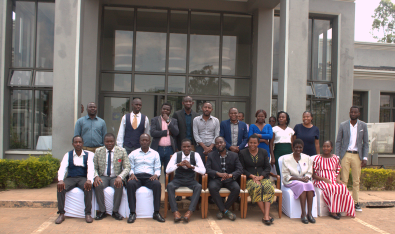
           
    Graduation ceremony for PHIM FETP Cohort 24

    Cohort 24 graduates and mentors at the scientific dissemination workshop.


    Highlights from the Scientific Presentations


    🚩
                       

    Investigation of a Diarrhoea Cluster in Mbandira EPA


    Investigated an acute watery diarrhoea cluster, identifying the source and at-risk populations. Findings informed targeted WASH interventions, preventing further spread.


    📈
                       

    Assessment of IDSR Data Quality for Measles in Chitipa South


    Conducted a data quality audit of the measles surveillance system, identifying gaps in completeness and timeliness. Recommendations improved reporting procedures and early warning sensitivity.


    🏕
                       

    Analysis of Malaria Case Trends in Agricultural Extension Planning Areas (EPA)


    Analyzed five years of malaria incidence data in key EPAs, identifying seasonal and geographic hotspots. The analysis guided targeted resource allocation for ITN distribution and larviciding.


    💉
                       

    Evaluation of Routine Immunization Coverage in Rural Health Facilities


    Assessed routine immunization coverage for children under two in underserved areas. The study identified access barriers, leading to the implementation of a mobile outreach clinic schedule.


    🦧
                       

    Evaluation of Tuberculosis Case Reporting Timeliness


    Assessed timeliness of Tuberculosis case reporting from diagnosis to national system entry. Recommended digital tools to expedite case notification and improve control measures.


    🐶
                       

    Rabies Post-Exposure Prophylaxis (PEP) Availability Audit


    Audited Rabies Post-Exposure Prophylaxis (PEP) availability and stock management at district health facilities. Findings ensure district readiness for animal bite incidents, reinforcing One Health collaboration.


    Capacity Building: The Core Objectives Achieved 


                The graduation is a tangible demonstration of PHIM’s commitment to achieving the core objectives of the Frontline FETP, which include:        


    • Improved Data Use: Increased appreciation among public health workers for the role of data in monitoring community health and informing decisions.
    •            
    • Enhanced Surveillance: Improved quality and use of surveillance data for disease and outbreak detection, strengthening the link between field epidemiology and laboratory services.
    •            
    • Rapid Response: Improved capacity to investigate and respond to public health events of importance, ensuring that local outbreaks are detected and prevented from spreading within and outside the country.
    •        
           

    Partner Acknowledgements


                The continued success of the Field Epidemiology Training Programme is made possible through the robust and sustained partnership between PHIM, the Ministry of Health, and our key technical and financial partners. We extend our sincere gratitude to:        


                    CDC Logo            
               
                    I-TECH Logo            


                PHIM extends its heartfelt congratulations to the 18 graduates of Cohort 24 and looks forward to their continued service as frontline defenders of public health in Malawi.        

       
  • FETP Cohort 6 Application.

    FETP Cohort 6 Application.

    Call for Applications: Intermediate Field Epidemiology Training Program (FETP) Cohort 6 | PHIM
    Capacity Building & Workforce Development

    Call for Applications: Intermediate Field Epidemiology Training Program (FETP) – Cohort 6

    Public Health Institute of Malawi (PHIM) | Ministry of Health & Sanitation
    Application Deadline: 18 Nov 2026 Start: 18 Jan 2027
    Intermediate FETP Training
    Global Health Security Agenda Target

    Building National Field Epidemiologic Capacity

    Strengthening Malawi’s frontline response to public health threats through a 9-month competence-based, in-service mentorship training program.

    Jointly supported by Ministry of Health, US CDC, and the World Bank. Target: 1 Field Epidemiologist per 200,000 Population

    LILONGWE, MALAWI — The Ministry of Health and Sanitation (MoHS) through the Public Health Institute of Malawi (PHIM), with funding from the World Bank and in collaboration with the US Centers for Disease Control and Prevention (CDC), hereby invites applications from qualified technical staff to participate in the sixth cohort of the Intermediate Field Epidemiology Training Program (FETP).

    Background & Strategic Objectives

    The 9-month in-service Intermediate FETP course targets One-Health government workers at national and sub-national levels to enhance their capacity for public health surveillance data analysis, surveillance system evaluations, outbreak investigation and response using descriptive and analytical epidemiology techniques, public health operational research designs, data collection, analysis, interpretation, and dissemination.

    The program will strengthen the country’s epidemiologic capacity and response to emerging public health threats by having a well-trained public health workforce, while accelerating progress toward attainment of the Global Health Security Agenda (GHSA) target of one trained field epidemiologist per 200,000 population.

    Target Applicant Pool

    Current employees of the Ministry of Health and Sanitation, Department of Animal Health & Livestock Development (DAHLD) in the Ministry of Agriculture, or the Ministry of Natural Resources and Climate Change whose daily responsibilities involve disease surveillance or public health emergency preparedness and response.

    Course Summary & Training Structure

    The Intermediate FETP is structured as a 9-month competence-based in-service model where trainees spend 25% of their time (8 weeks) in classroom/workshop environments and 75% of their time (25 weeks) at their workstations carrying out practical field projects:

    • Public Health / Disease Surveillance: System description, data quality evaluation, and routine monitoring.
    • Outbreak Investigation & Response: Real-time field containment and epidemiological investigation.
    • Epidemiological Research: Designing observational studies, sampling strategies, and questionnaire development.
    • Data Analytics & Management: Advanced surveillance data cleaning, interpretation, and visualization.
    • Public Health Communication: Scientific report writing, executive briefings, and oral presentations.
    Field-Based Work (75% / 25 Weeks)

    On-the-job Phase 1

    • System evaluation
    • Surveillance data analysis
    • Outbreak response

    On-the-job Phase 2

    • Surveillance data (cont.)
    • Pilot group questionnaire
    • Outbreak response

    On-the-job Phase 3

    • Group project data collection
    • Data analysis (cont.)
    • Outbreak response

    On-the-job Phase 4

    • Finish analyzing data
    • Write technical report
    W 1–2
    W 3–8
    W 9–10
    W 11–16
    W 17
    W 18–24
    W 25
    W 26–31
    W 32–33
    Classroom Workshops (25% / 8 Weeks)

    Workshop 1

    Surveillance systems, Data analysis, Outbreak investigation, Epi Info Part 7, Group Project Intro.

    Workshop 2

    Field presentation, Observational studies, Questionnaire design, Sampling & protocol.

    Workshop 3

    Public health communication & technical report writing.

    Workshop 4

    Clean & analyze project data, report drafting, oral presentation techniques.

    Workshop 5

    Finalize report, oral defense of group project, closing ceremony.

    Eligibility & Qualification Criteria

    Applicants must be serving technical personnel at national or district level in one of the approved One-Health government entities:

    Roles & Qualification

    • • Officers responsible for surveillance data, outbreak response, or operational research
    • • Degree or higher in Health Sciences, Animal Health, or Environmental Science
    • • OR Diploma with Frontline FETP Certificate from a recognized institution

    Technical & Long-term Commitment

    • • Computer proficiency in MS Word, Excel, and PowerPoint
    • • Uninterrupted access to a laptop for the full 9 months
    • • Clear vision for utilizing skills and commitment to serve as a mentor for future cohorts

    Application Submission Guidelines

    Interested candidates should submit their application online using this link: https://forms.gle/aMJp1vzMXPiBsAQQ9. Alternatively, applicants can download the official manual application form here: Download Application Form (MS Word). All applications must be submitted no later than Close of Business (COB), Monday, 18th November 2026.

    Mandatory Submission Attachments:
    • Fully completed application form with official supervisor endorsement.
    • Certified copies of relevant professional training certificates (Diploma or Degree).
    • A detailed motivation letter demonstrating how skills will enhance workplace surveillance systems and emergency response.
    Share Call Announcement:
  • FETP – Call for Applications.

    Call for Applications: Intermediate FETP – PHIM
    CLOSED
    Public Health Institute of Malawi Logo

    Public Health Institute of Malawi (PHIM)

    Ministry of Health

    Call for Applications

    Intermediate Field Epidemiology Training Program (FETP) – Cohort 4


    1. Background & Program Goal

    The Ministry of Health (MoH) through the Public Health Institute of Malawi (PHIM), with funding from the World Bank and in collaboration with the US CDC and I-TECH, invites applications for the fourth cohort of the Intermediate Field Epidemiology Training Program (FETP).

    This 9-month in-service course targets public health workers at national and sub-national levels to enhance their capacity in:

    • Public health surveillance data analysis and system evaluations.
    • Outbreak investigation and response (descriptive and analytical epidemiology).
    • Use of statistical software like R for epidemiologists.
    • Public health operational research design and dissemination.
    The program aims to strengthen the country’s epidemiologic capacity and accelerate progress towards the Global Health Security Agenda target of one trained field epidemiologist per 200,000 population.

    2. Eligibility Requirements

    The training is open to current technical staff employed within the Ministry of Health (MoH), the Department of Animal Health & Livestock Development (DAHLD) in the Ministry of Agriculture, or the Ministry of Natural Resources and Climate Change.

    Specific Applicant Requirements:

    • Role: Officers responsible for compilation/analysis of surveillance data, outbreak investigation, operational research, and public health communication at district, regional, or national level.
    • Education: Undergraduate degree or higher in Health Sciences, Animal Health, Environmental Science OR Diploma and Frontline FETP Certificate from a recognized institution.
    • IT Skills: Basic computer knowledge and skills (Microsoft Word, Excel, Power Point).
    • Equipment: Access to a laptop throughout the 9-month training period.
    • Vision: Demonstrate a clear vision on how the knowledge gained will improve public health surveillance systems, outbreak response, and data quality.
    • Commitment: An interest in becoming a mentor for subsequent FETP Intermediate cohorts.

    3. Course Summary & Structure

    This is a 9-month competence-based in-service training. Trainees spend 25% (8 weeks) in face-to-face workshops and 75% (25 weeks) in the field at their work stations, applying skills to real public health challenges.

    Core Competencies Gained:

    • Public health/Disease surveillance
    • Outbreak investigation and response
    • Design and conduct of epidemiological studies
    • Data management, analysis, and interpretation for decision making
    • Public health communication

    Training Timeline Overview (9 Months)

    Workshop 1

    Weeks 1-2 & Weeks 3-8 (On-the-job)

    Surveillance systems, Data analysis, Outbreak investigation, Epi Info Part 7

    Workshop 2

    Weeks 9-10 & Weeks 11-16 (On-the-job)

    Project Presentation, Observational studies, Study Protocol, Sampling & sample size

    Workshop 3

    Week 17 & Weeks 18-24 (On-the-job)

    Public health communication, Technical report writing

    Workshop 4

    Week 25 & Weeks 26-31 (On-the-job)

    Analyze Group Project Data, Report Development, Oral Presentation skills

    Workshop 5

    Weeks 32-33

    Finalize Report, Oral Presentation, Closing Ceremony

    Start Date: The first workshop (Module 1) is scheduled for Monday, 17th November, 2025.

    4. Application Procedure & Deadline

    1. Application Closed: The application period for Cohort 4 has now closed as of October 16, 2025.
    Download Form (Application Closed) NOTE: The application deadline was Thursday, 16th October, 2025.

    2. Required Documents: All applications must include:

    • A thoroughly filled Application Form (endorsed by your supervisor).
    • Copies of Certificates of relevant professional training (Diploma or Degree).
    • A Motivational Letter explaining how the knowledge and skills gained from the course will help in improving public health surveillance systems, outbreak detection and response, and day-to-day work responsibilities.

    3. Submission: Completed applications should be submitted via email to both addresses below:

    Final Application Deadline

    Thursday, 16th October, 2025

    Close of Business (COB)

    5. Further Information

    For further inquiries, please contact:

    Dr. Amir Juya

    FETP Intermediate Resident Advisor

    Email: ajuya@itech-malawi.org

    Phone: 0985 591 951

    Grace Funsani

    Head of Capacity Building and POE

    Email: grace.funsani@health.gov.mw

    Phone: 0999 950 398