PHIM Responsive Header

Tag: Call for Applications

  • Call for applications for the APHR Traineeship Programme.

    Call for applications for the APHR Traineeship Programme.

    PHIM Laboratory Team
    Official Call for Applications

    Applied Public Health Research (APHR) Traineeship Programme

    PHIM-RKI Partnership Programme (October 2026 – December 2028)

    Building institutional capacity and developing a dedicated cohort of research multipliers across PHIM’s core operational divisions.

    Target Audience

    Early- to Mid-Career Staff

    BSc / MSc Qualifications

    Duration

    2 Years (Oct 2026 – Dec 2028)

    3 Workshops + Mentorship

    Cohort Size

    9 Selected Trainees

    R&D, Epi & NPHL Divisions

    Application Deadline

    09 September 2026

    Submit by 23:59 CAT

    Programme Overview

    The Public Health Institute of Malawi (PHIM), in collaboration with the Robert Koch Institute (RKI)—Germany’s national public health institute—is pleased to invite applications from eligible PHIM staff for the Applied Public Health Research (APHR) Traineeship Programme.

    Implemented under the framework of the Team Europe Initiative supporting the Public Health Institute of Malawi (TEI PHIM) and co-funded by the European Union and the German Federal Ministry for Economic Cooperation and Development (BMZ), this 2-year capacity-building programme is designed to strengthen applied public health research competencies across PHIM’s key operational areas.

    Train-the-Trainer (ToT) Multiplier Approach

    The APHR Traineeship aims to establish a high-caliber cohort of public health professionals who will not only advance their own research competencies but also act as trainers and mentors (“multipliers”), systematically cascading knowledge, methodologies, and skills within their respective divisions.

    Partner Institutions & Funding Attribution

    This initiative is jointly organized and supported by leading public health and development entities:

    PHIM Logo

    PHIM

    Public Health Institute of Malawi – Host institution & lead operational body.

    RKI Logo

    Robert Koch Institut

    Germany’s national public health institute – Technical collaboration & mentorship partner.

    GIZ Logo

    GIZ

    Deutsche Gesellschaft für Internationale Zusammenarbeit GmbH – Implementation partner.

    Implemented under Team Europe Initiative (TEI PHIM) Co-funded by the European Union & German Federal Ministry (BMZ)

    What Trainees Gain

    • Free, competency-based training in applied public health research.
    • Hands-on experience leading research projects of direct national relevance.
    • Mentorship from experienced national and international public health researchers.
    • Peer-reviewed publication: Expert support to publish research findings.
    • Policy engagement: Guidance in translating evidence into policy briefs and dialogues.
    • Certificate of Participation upon successful completion.

    What is Expected

    • Full participation across the 2-year programme duration.
    • Attend 3 in-person training workshops and adjacent cohort meetings.
    • Active engagement in monthly online seminars and mentoring sessions.
    • Completion of self-paced e-learning modules and coursework.
    • Conduct a small-scale applied research project in a team setting.
    • Cascade knowledge and skills to colleagues within PHIM.

    Curriculum Framework & Research Areas

    The programme provides a broad, competency-based curriculum grounded in the WHO Global Competency and Outcomes Framework (2024), tailored specifically to PHIM’s operational research priorities. It addresses core competencies under the Essential Public Health Function 11 (EPHF 11) across the complete research cycle:

    Priority Setting
    Protocol Development
    Ethics & Governance
    Data & Analysis
    Scientific Writing
    Knowledge Translation

    Three Strategic Focal Research Areas

    Aligned with Malawi’s National Health Research Agenda II (2023–2030), trainees will execute team projects in one of the following key pillars:

    Area 1

    Universal Health Coverage (UHC)

    Addressing health systems, equitable access, and essential healthcare delivery.

    Area 2

    RMNCH

    Reproductive, Maternal, Newborn, and Child Health clinical & population research.

    Area 3

    Health Security

    Surveillance, disease outbreak readiness, emergency response, and diagnostics.

    Indicative Time Commitment

    Applicants must ensure they can allocate sufficient time to complete all traineeship components alongside their operational duties:

    Programme Activity Estimated Time Commitment
    3 In-Person Workshops + Cohort Meetings Approx. 7 days each (8 hours/day)
    Live Online Group Sessions & Webinars 2 hours per month
    Self-Directed E-Learning & Exercises At least 2 hours per month
    Applied Research Activities At least 4 hours per month
    Cascading Training at PHIM (ToT) Preparation & delivery schedule TBC

    Eligibility Criteria & Cadre Scope

    PHIM Divisional Representation & Cadre Scope

    Open to active early- to mid-career technical officers, researchers, lab scientists, and public health staff serving in PHIM’s 3 core operational divisions: Research and Development (R&D), Epidemiology and Surveillance, or National Public Health Laboratories (NPHL).

    Educational Background

    Must hold a Bachelor’s or Master’s degree in public health, epidemiology, biomedical science, medicine, or a related discipline. Note: Candidates who already hold a PhD will not be considered.

    Research Motivation & Commitment

    Demonstrate a strong interest in applied public health research and commit to participating in all traineeship activities across the full 2-year timeline.

    Multiplier Potential & Capacity

    Willingness and professional standing (or demonstrated potential) to serve as a trainer and cascade learning to colleagues within their division.

    Supervisor Endorsement

    Provide written confirmation and signature from your direct supervisor agreeing to grant protected time for all programme activities.

    Application Checklist

    Complete packages must be submitted by email before the deadline.

    • Expression of Interest: Max 500 words addressing motivation, alignment with role, commitment, focal area choice, and cascading plan.
    • Curriculum Vitae (CV): Up-to-date, maximum 2 pages highlighting qualifications and experience.
    • Participant Application Form: Completed and signed (Annex 1).
    • Supervisor Endorsement: Official signature on Section F of the form.
    Download Application Form (.docx)

    Key Programme Timeline

    1

    26 August 2026

    Applications Open

    Call launched across PHIM divisions.

    2

    09 September 2026

    Submission Deadline

    All documents must be received by 23:59 CAT.

    3

    09–25 September 2026

    Selection Review Process

    Competitive evaluation by PHIM-led committee.

    4

    28 September 2026

    Applicants Notified

    Selected cohort of 9 trainees announced.

    October 2026

    Traineeship Commencement

    Programme runs through December 2028.

    Submission & Enquiries

    Submit all complete application components or send general inquiries to the Programme Coordinator:

    Contact Person

    Ms. Bessie Phiri

    phim-rki@health.gov.mw

    Participation is free of charge. Workshop travel and project research expenses are fully covered by the programme.

    Joint Partnership & Technical Collaboration

    Public Health Institute of Malawi (PHIM) · Robert Koch Institute (RKI) · Deutsche Gesellschaft für Internationale Zusammenarbeit (GIZ)

    Authored & Published By

    Penjani Phiri & Moses Nyambalo Phiri

    Public Health Institute of Malawi

    Ministry of Health, Republic of Malawi
  • CALL FOR APPLICATION: LEAD CONSULTANT: EVALUATION OF MALAWI FRONTLINE FIELD EPIDEMIOLOGY TRAINING PROGRAM (FETP)  

    CALL FOR APPLICATION: LEAD CONSULTANT: EVALUATION OF MALAWI FRONTLINE FIELD EPIDEMIOLOGY TRAINING PROGRAM (FETP)  

    0
    Day
    0
    Hour
    0
    Minute
    0
    Second

    LEAD CONSULTANT: EVALUATION OF MALAWI FRONTLINE FIELD EPIDEMIOLOGY TRAINING PROGRAM (FETP)  

    The Malawi Government through the Ministry of Health established Public Health Institute of Malawi (PHIM) in 2013, as a Centre of Excellence in Public Health.  Its primary role is to provide leadership in disease surveillance, research, prevention, and control through generating evidence that informs policy and advances practices in public health service delivery. PHIM is dedicated to strengthening the nation’s capacity in order to respond to a broad spectrum of public health challenges. This includes addressing emerging communicable and non-communicable diseases.

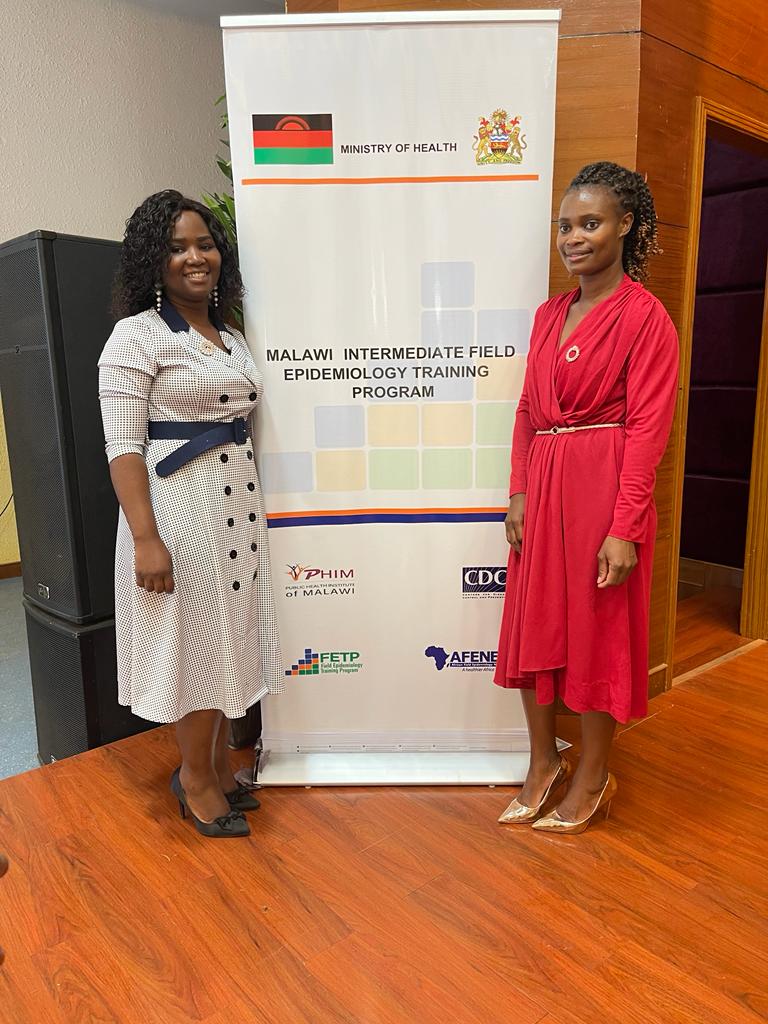
    In 2016, PHIM with technical and financial support from the Centre for Disease Control (CDC) established the Frontline Field Epidemiology Training Program (FETP). The program aims to strengthen the epidemiological capacity of the country’s ministries of health, agriculture, and environment in detecting and responding to diseases with epidemic potential or international significance.  To date, Malawi’s Frontline FETP  has completed 22 cohorts and trained 301 personnel.

    Evaluation Background

    The implementation of Frontline FETP represents a significant investment for Malawi, its implementing partners, and the U.S. Centers for Disease Control and Prevention (CDC). Since its establishment in 2016, no formal evaluation has been conducted for the Malawi Frontline FETP. The Public Health Institute of Malawi (PHIM) and the US CDC have designed a non-experimental mixed-methods evaluation, using document review, structured questionnaires, site visits, and semi-structured interviews. These methods will be used to answer the following objectives:

    1. Describe best practices and challenges related to implementing the first 22 cohorts of Malawi’s Frontline FETP.
    2. Assess the impact of the involvement of Malawi’s Frontline FETP graduates in public health emergency responses and epidemiologic surveillance capacity (since the start of the program).
    3. Evaluate the effectiveness of Malawi’s Frontline FETP in imparting surveillance and response to public health threats skills.

    Scope of Work

    The selected consultant(s) will lead the data collection, analysis, report writing, and the dissemination of findings for the evaluation of the Malawi FETP Frontline program.

    The lead consultant(s) will be responsible for:

    • Managing the human resources for this evaluation, including a team of interviewers and a scheduler.
    • Joining PHIM/CDC evaluation team meetings and providing weekly progress updates to evaluation stakeholders.
    • Conducting a document review of Malawi FETP documents including, but not limited to:
      • Collaborative Technical Assistance Plans (CTAPs),
      • knowledge assessments (pre/post quiz)
      • cohort exit reports
      • completed scorecards/rubrics of graduate field products
      • outbreak reports collected by investigation unit
    • Leading the training of a team of interviewers who will conduct virtual interviews with job supervisors, and outbreak or public health emergency supervisors. The virtual interviews will be conducted  over the phone or online (WhatsApp or Zoom).
    • Leading the training of a team of interviewers who will conduct the in-person interviews and site visits to graduates and work supervisors in Malawi.
    • About 70% of the total interviews will be conducted virtually, while 30% of the interviews will be conducted in-person (face to face).
    • Along with the team of interviewers, assist with conducting and overseeing in-person worksite visits and in-person  interviews with 90 Malawi FETP graduates (30% of the population).
    • Conduct semi-structured interviews with Malawi’s FETP staff (Resident Advisor [former and current], Program Director, Program Coordinator, CDC country Director, administrator (s)).
    • Manage data in relevant data collection software or platform, e.g. ODK or Kobo Tools.
    • Lead the analysis of data collected using relevant qualitative and statistical analysis software.
    • Write the final evaluation report in English
    • Present findings to various stakeholders (PHIM, CDC, Malawi Ministry of Health).

    High-level requirements

    • High level of English language proficiency
    • More than 5 years of experience managing, coordinating, and conducting evaluations, preferably in the global health field, with cross-cultural teams.
    • Previous work experience in Southern Africa, preferably in Malawi.
    • Demonstrated experience using both quantitative and qualitative methods
    • Demonstrated experience using survey platforms (i.e., Qualtrics, SurveyMonkey, ODK, etc.), qualitative analysis software (i.e., ATLAS.ti, MaxQDA, NVIVO, etc.), and quantitative analysis software (i.e., R, Stata, etc.).
    • Detail-oriented, strategic, and a positive attitude towards dealing with setbacks and obstacles.
    • Excellent interpersonal communication skills and ability to interact professionally with culturally diverse individuals.
    • Preferably based in Southern Africa but not required.

    MODE OF APPLICATION