PHIM Responsive Header

Category: Latest News and Events

  • Point Prevalence Survey and Antibiogram Training Exercise

    Point Prevalence Survey and Antibiogram Training Exercise

    Point Prevalence Survey and Antibiogram Training Exercise

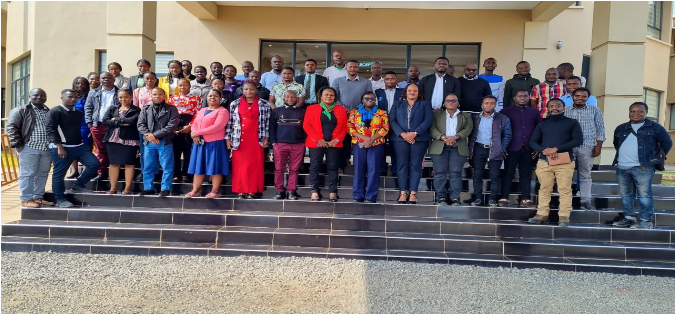
    The AMRNCC with funding from the Eastern, Southern and Central Africa (ESCA) recently conducted a training on the implementation of Point Prevalence Surveys (PPS) and the development of Antibiograms. This training involved 5 participants from 7 health facilities each namely; Mangochi District Hospital, Mzimba District Hospital, Malamulo Hospital, Mzuzu Central Hospital, Zomba Central Hospital, Kamuzu Central Hospital and Queen Elizabeth Central Hospital. The 5 participants included a member from the following cadres; infection prevention and control, nursing, laboratory, clinician and pharmacy. Point prevalence surveys and antibiograms are important and recommended to be done often by health facilities because they inform decisions at health facility level on antimicrobial use and antimicrobial effectiveness, respectively.

    This one-week trainer of trainer session was conducted at Chikho Hotel in Mponela from July 10th to 14th, 2023. Some of the topics covered during this session were; introduction to PPS, planning PPS, collecting data using the PPS tool, introduction to WHONET software, introduction to antibiograms, interpretation and use for guideline development and practical sessions for WHONET, PPS and Antibiograms.

    In order to solidify the knowledge gained during this classroom training, a pilot practical session, took place between July 24th to 28th July 2023.

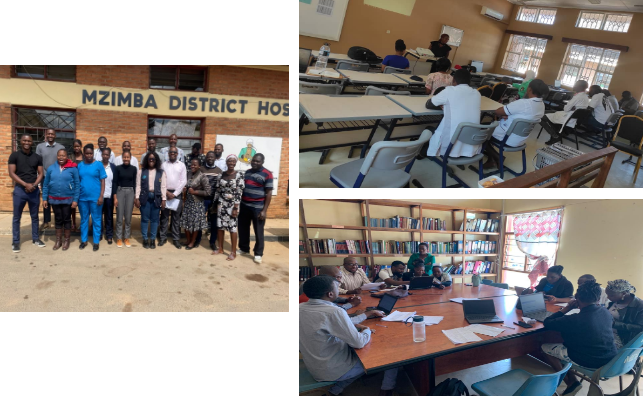
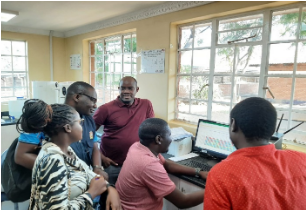
    During this pilot session, the facility AMS teams performed and Point prevalence survey on antibiotic use using specific in-patient files and developed facility-specific antibiograms utilizing routine laboratory surveillance data. The pilot data collection session was supervised by key experts from the AMNRCC to ensure an efficient learning process and collection of data which may inform facility AMS activities. After the data collection exercise was done, the facilities are analyzing the data before disseminating their facility findings.

    Story in Pictures

    The activity being scaled down to facility level
  • Quality of Malaria and Tuberculosis Genomic Sequencing in Malawi.


    Genomic Surveillance Webinar | PHIM Malawi


    Pathogen Genomic Surveillance

    Quality of Malaria and Tuberculosis
    Genomic Sequencing in Malawi

    Analyzing the quality and impact of Next-Generation Sequencing (NGS) for Malaria and Tuberculosis. Strengthening national diagnostic precision through high-fidelity genomic data.

    Date & Time

    Wed, 22 April | 2 PM – 3 PM


    Lead Scientists & Contributors

    Dr. Matthew Kagoli

    Dr. Matthew Kagoli

    Director, PHIM

    Dr. Kagoli provides comprehensive oversight of the strategic integration of genomic surveillance into Malawi’s National Health Security Framework. He focuses on ensuring that genomic data informs real-time public health responses and national policy. His leadership is pivotal in bridging the gap between laboratory research and community-level interventions. He is a strong advocate for evidence-based decision-making in the Malawian healthcare system.

    Dr. Bitilinyu Bango

    Dr. Bitilinyu Bango

    Deputy Director, PHIM

    Dr. Bango leads the technical implementation of advanced sequencing platforms specifically targeted at Malaria drug-resistance monitoring. He is instrumental in establishing TB lineage characterization protocols that meet international standards. His expertise ensures that the laboratory workflows remain efficient and scalable during public health emergencies. He actively collaborates with international partners to bring cutting-edge technology to the PHIM laboratories.

    Dr. Bernard Mvula

    Dr. Bernard Mvula

    Head of Knowledge Management

    Dr. Mvula is a specialist in bioinformatics and data architecture, focusing on the complex translation of raw sequencing reads into actionable insights. He manages the national genomic data repositories, ensuring data integrity and accessibility for research and surveillance. His work is essential for developing automated pipelines that reduce the turnaround time for diagnostic reporting. He also leads training initiatives to build bioinformatics capacity within the Malawian scientific community.

    Flora Dimba

    Flora Dimba

    Deputy Director, E&S Unit

    Ms. Dimba provides expert leadership in epidemiological field linkage, ensuring that genomic findings for TB and Malaria are geographically mapped. Her work allows for targeted interventions in hotspots where drug resistance or specific lineages are emerging. She coordinates with district health offices to synchronize sample collection with surveillance data. Her efforts are vital for maintaining the resilience and transparency of Malawi’s integrated health monitoring systems.

    Technical Delivery

    Deep dive into laboratory protocols, bioinformatic pipelines, and quality assurance for pathogen sequencing.

    • Sequencing Library Prep Standards
    • Bioinformatics Pipeline Review
    • QA/QC for Clinical Data

    Seminar Program

    Wednesday, 22nd April

    02:00 PM

    Opening & Policy Context

    State of Genomics in Malawi: Dr. Matthew Kagoli

    02:15 PM

    Malaria & TB Quality Assessment

    Benchmarking Sequencing Accuracy: Dr. Bitilinyu Bango

    02:35 PM

    Bio-Surveillance & Resistance Mapping

    Data Integration: Dr. Bernard Mvula & Flora Dimba

    02:50 PM

    Interactive Q&A Session

    Open Floor: Addressing Laboratory Challenges

    Webinar Registration

    Join the specialized session on Pathogen Genomic Quality.

    Research & Resources

    Authored & Published By

    Moses Nyambalo Phiri

    Public Health Institute of Malawi

    Ministry of Health, Republic of Malawi

    Advancing Diagnostic Excellence in Malawi


  • Cholera cases continue to rise

    Cholera cases continue to rise.  Two hundred and sixty five (265) cumulative cases have been reported as of 15 January 2018 across the country with the highest number coming from Karonga at 196 cases.

    Other districts affected include Kasungu-1, Dowa-4, Nkhatabay-18, Lilongwe- 37, and Salima-9. However, new cases for the past five days have only been recorded in Karonga and Lilongwe.

    Since the start of the outbreak in November last year, four deaths, all from Karonga have been recorded with one community death and the other three facility deaths. It is important to note that all these deaths occurred in the initial stages of the outbreak.

    A total of 15 cholera patients are still admitted in the affected districts.

    Currently, intervention to curb the outbreak include intensive sensitization, intensive surveillance, contact follow ups, treatment of water and door to door campaigns aiming to reach out to every household.